
How to prepare surfaces and the different techniques
How to prepare surfaces and the different techniques
Preparing surfaces is a critical step in countless industries, including construction, manufacturing and gas and oil – just to name a few.
Knowing how to prepare surfaces properly and the different techniques available will not only enhance the durability and adhesion, but the overall quality of finishes, coatings and treatments too.
In this blog, we’ll explore some of the most effective surface preparation techniques, how they’re applied in different fields, and why getting this step right is essential for long-lasting results.
How to prepare surfaces such as concrete
Surface preparation is a key step in any concrete preparation project and knowing how to prepare surfaces properly is essential. It’s important to ensure that the concrete surface is clean and in good condition before any coating, covering or additional concrete is applied. This means removing any dirt, debris or other contaminants from the surface, as well as repairing any cracks or other damage.
The concrete texture is critical to the construction process, as either smoothing the surface or adding texture may be desired. See information on CSP surface roughness for more information: 7 Concrete Surface Roughness Measurement Methods.
Removing excess concrete depth caused by carbonisation is an essential part of surface preparation in the construction industry. Expert advice is always required in such situations; however, there are many tools available within the surface preparation tool category which can help to solve these issues.
Recommended tools:
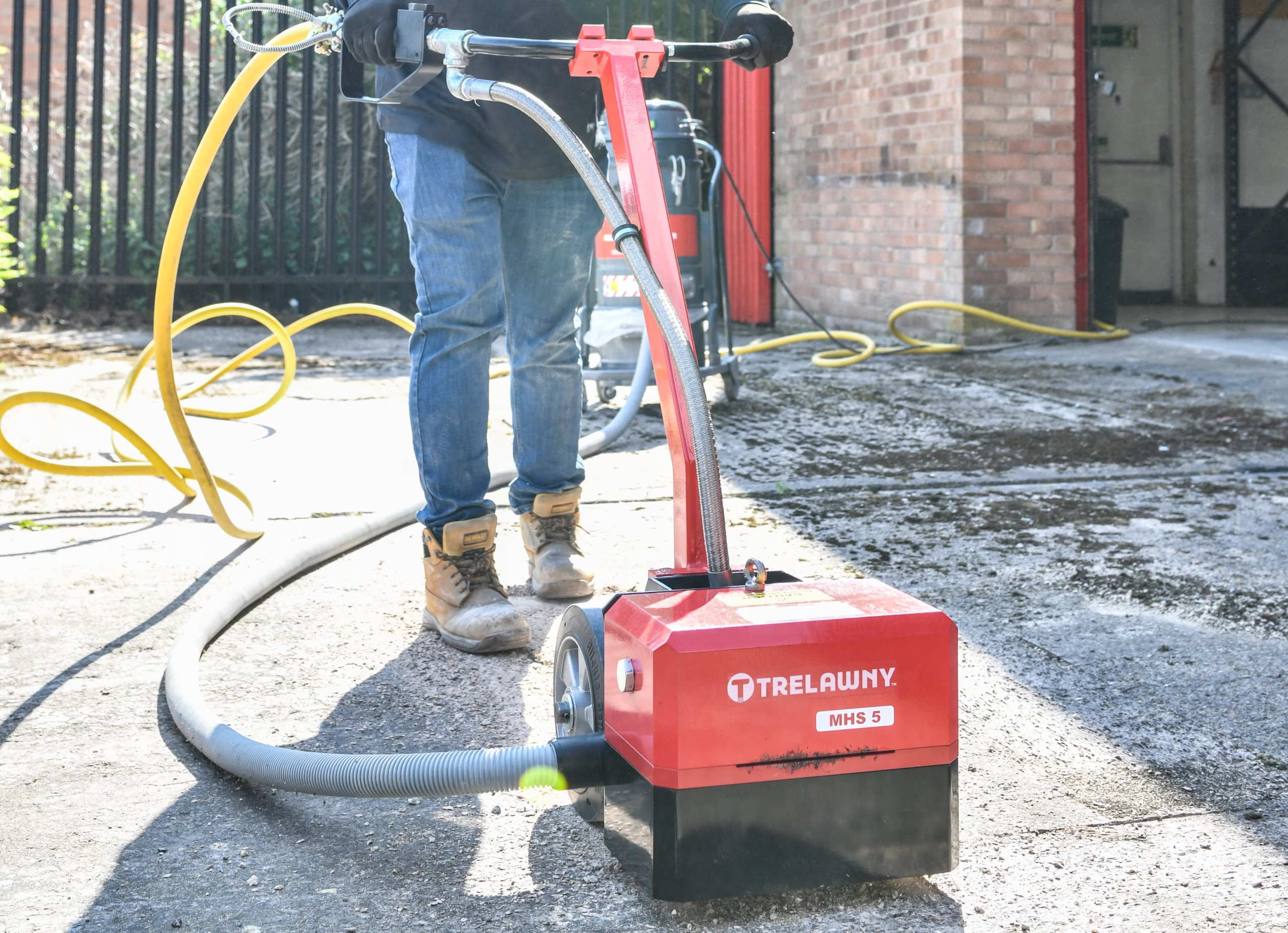
- Floor machines – Floor scarifier
- Floor scabblers – Products
- Floor grinders – Floor grinder
H2: How to prepare surfaces by removing coatings
Surface preparation tools are an essential part of the process of removing coatings, corrosion and other accumulated materials from metal surfaces, especially in the marine, industrial and automotive industries. There are a variety of tools available for this purpose, including scarifying, scabbling, grinding, abrasive blasting equipment and chemical strippers. In most cases, the most appropriate tool for the job will depend on the type of material to be removed and the surface condition.
Descaling and scabbling machines are best for removing localised rust or other corrosion from a metal surface, while abrasive blasting equipment is more suitable for removing paint and other coatings from larger metal areas. Chemical strippers are also useful for removing accumulated dirt and grime from metal surfaces but require risk assessments to be carried out and PPE to be worn. It’s important to use the correct type of tool when prepping a metal surface, as using the wrong one could damage the surface or cause further corrosion or discolouration.
Recommended tools:
- Needle scalers and chisel scalers – Needle & Chisel Scalers
- Scabblers – Products
- Strippers – Products
- Scarifiers and grinders – Floor Machines
How to prepare surfaces by descaling and stripping
Descaling and surface preparation tools are perfect for any industrial, marine, or construction application that requires weld preparation, rust and oxide removal, scale removal, old paint removal, tough coating removal, floor paint/coating removal and concrete scarifying.
These pneumatic tools are well-suited for heavy-duty applications because they are designed to work quickly and efficiently. They can also be used with various materials and surfaces, making them very versatile. They are also highly durable and can stand up to the wear and tear of intense use. So whether you’re looking for a tool for removing rust or for scarifying concrete, descaling and surface preparation tools are the perfect solutions.
Recommended tools:
- Floor Machines such as Grinders, Scarifiers
- Scabblers & deck planars & deck hammers- Products
How to prepare surfaces and control and extract dust
All surface preparation tasks like demolition, grinding, drilling, sanding, sawing and chasing create dust. This dust can be both a health hazard and an environmental hazard, so it is important to have effective dust suppression systems in place. Fortunately, there are a variety of dust control machines and equipment available to help keep the air clean. These machines can be used to capture dust particles at their source before they are released into the air.
In addition, some systems use water to create a mist that helps to keep dust particles from becoming airborne. With the right dust suppression equipment, construction sites can be made much safer and more environmentally friendly.
Recommended tools:
- Industrial Dust collector
- Pneumatic Vacuum
Surface preparation is key to achieving the desired results in any project, and knowing how to prepare surfaces correctly is crucial. Without the proper preparation of surfaces, the materials used may not adhere correctly, and the overall performance of the project will suffer. Specialised surface preparation equipment is the best way to ensure that surfaces are ready for the application of materials. This equipment is designed to clean and smooth surfaces, removing any contaminants that could affect adhesion and performance. By taking the time to prepare surfaces properly, you can be sure that your project will be successful.
Contact us
If you’d like advice on finding the best tools and guidance on how to prepare surfaces for your project, contact us – we’re here to help.
