

How to select an electric air compressor for your Long Reach Scraper
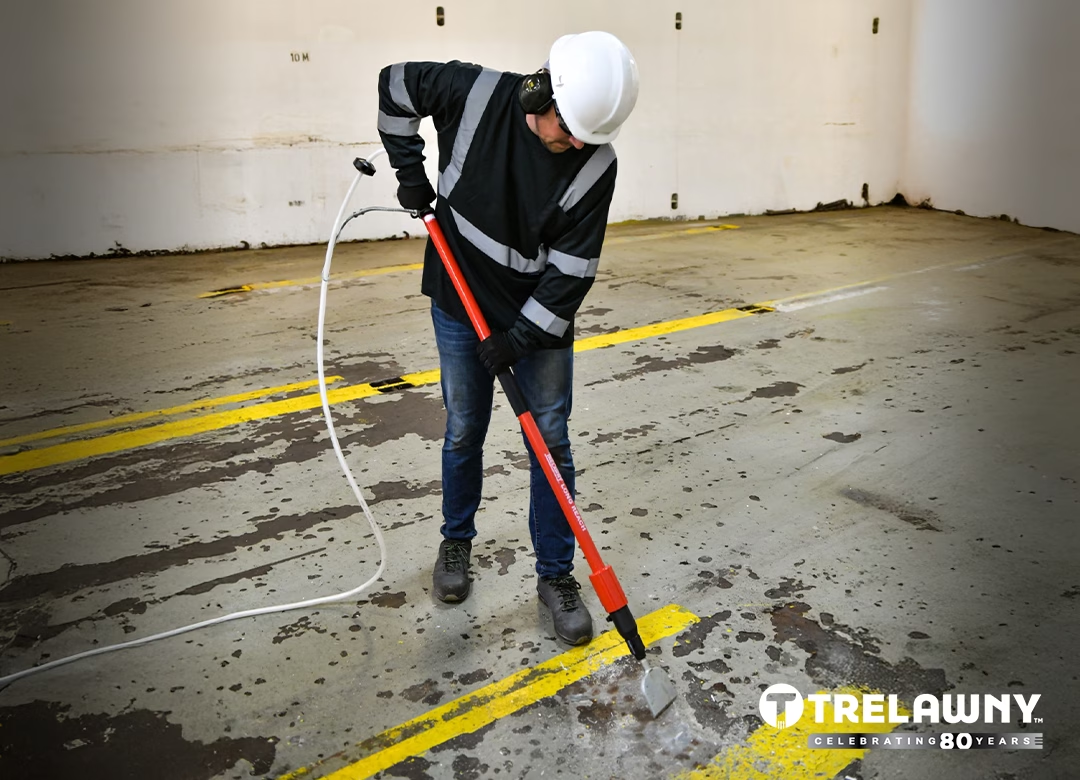
The Trelawny Long Reach Scraper range is a highly portable option for flooring and renovation work, as it only requires a compact electric air compressor. That’s why selecting a suitable compressor is crucial to ensure reliable performance. So, let’s look at how to choose the right setup to get the best out of your equipment.
Trelawny’s simple guide to cut through the air compressor jargon
When choosing an electric air compressor, you want to consider the airflow and pressure.
- Airflow refers to the volume of air required to power the tool, measured in cubic feet per minute (CFM) or litres per second (l/s). The Long Reach Scraper requires just 4.5 CFM or 2.1 l/s.
- Air pressure is typically measured in pounds per square inch (PSI) or BAR. This is the force required to operate the tool. All Trelawny tools are optimised to work at 90 PSI or 6.2 BAR Working Pressure.
A simple way to think of airflow and pressure is this:
- Pressure = the force required to move the object (power the tool).
- Flow = how far we can move the object (how long we can operate the tool).
If the air compressor is incorrectly sized, there won’t be the force to power the tool, and with too little flow, the tool cannot operate for any period.
FAD vs displaced CFM — why it matters for your electric air compressor
When looking at compressor airflow specifications, it’s important to check whether the output is listed as free air delivered (FAD) or displaced. FAD is calculated at a set atmospheric condition and is roughly a third less than the displaced value. It is the FAD figure to consider when determining the airflow to run the tool.
Having selected compressors with suitable airflow and pressure, the following should be considered to maximise the usability and performance of the Long Reach.
- Tank size
The air compressor tank is a reservoir to store air so that the motor is not continuously running and ensures the tool is ready to go as soon as you pull the trigger. Tank size is closely linked to the duty cycle.
- Duty cycle
Duty cycle tells us how long an electric air compressor can operate before needing a rest. For example, a compressor with only a 50% duty cycle could operate for 30 minutes before resting for 30 minutes. A larger tank will reduce the time the motor and pump are running.
- Motor size
Listed by horsepower (HP) or kilowatts (kW), this is the electric motor power to drive the pump. While important, pump efficiency and tank size all play a part. Selecting an electric air compressor powered by a motor that can be operated on a 230v or 110v single-phase supply is the key measure to ensure you can fully utilise the Long Reach performance.
Next steps for your project
The Long Reach benefits from an efficient design that can be powered by a portable electric air compressor, making it a highly portable and efficient tool for renovation work. When selecting an air compressor, it is critical to understand the key specifications. Based on this, we recommend using a compressor with the following:
- Minimum 10 CFM displacement (approx. 6.5 CFM FAD)
- A minimum 30-litre tank capacity
- A minimum 80% duty cycle
- Powered by a 3 HP (2.2 kW) motor operated on a single-phase 230v 13-amp supply
A larger, more powerful electric air compressor will give increased headroom, deliver consistent CFM and give the most reliable performance.
Top tips
- Keep your Long Reach tool and air compressor well maintained, regular care maximises performance and extends durability.
- Check all hoses and connections to ensure no air is lost. A tight system means stronger performance, less strain on your electric air compressor, and greater reliability.
- Power your air compressor safely by using the correct electrical setup, it protects the motor and ensures consistent performance.
- Need to work further away? Extend the air hose rather than the electrical cable to maintain safe and efficient operation.
- Adjust pressure as needed to maintain a stable 90 PSI (6.2 BAR) while the tool is in use for optimum results.
- Choose a minimum 3/8” (10mm) diameter air hose to give your tools the airflow they need.
- Lay out hoses straight and free from kinks or damage. A clear, well-managed hose setup keeps your workspace safer and your airflow consistent.
Contact us
For further information, please contact our expert technical sales team. We’re here to help you with product advice, setup recommendations and helping you get the most out of your equipment.
