Dust control in Surface Preparation: Understanding LEV Testing and your responsibilities
For many years, discussions around operator safety in surface preparation have focused on vibration exposure and Hand-Arm Vibration Syndrome (HAVS). While these remain important considerations, dust control is becoming an increasingly significant area of focus across many industries.
From construction and manufacturing to marine and infrastructure maintenance, contractors are facing greater scrutiny over how airborne contaminants are managed on site. As a result, effective dust control is no longer simply a housekeeping measure. It is an important part of creating safer working environments and supporting operational efficiency.
Why dust control matters in Surface Preparation
Surface preparation activities such as coating removal, concrete scabbling, grinding, and needle scaling can generate significant quantities of airborne dust.
Without effective dust control measures in place, operators and nearby workers may be exposed to airborne contaminants that can impact both health and site safety. Excessive dust can also reduce visibility, increase clean-up requirements, and affect productivity on site.
As awareness of occupational dust exposure continues to grow, site safety teams, auditors, and regulatory bodies are paying closer attention to how contractors manage dust at source.
Understanding dust control and LEV Systems
Local Exhaust Ventilation (LEV) is designed to capture airborne contaminants before they can be inhaled by operators or spread throughout the workplace.
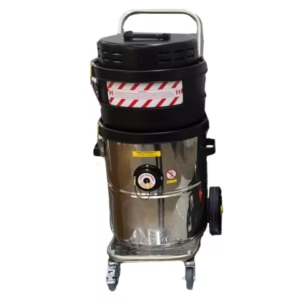
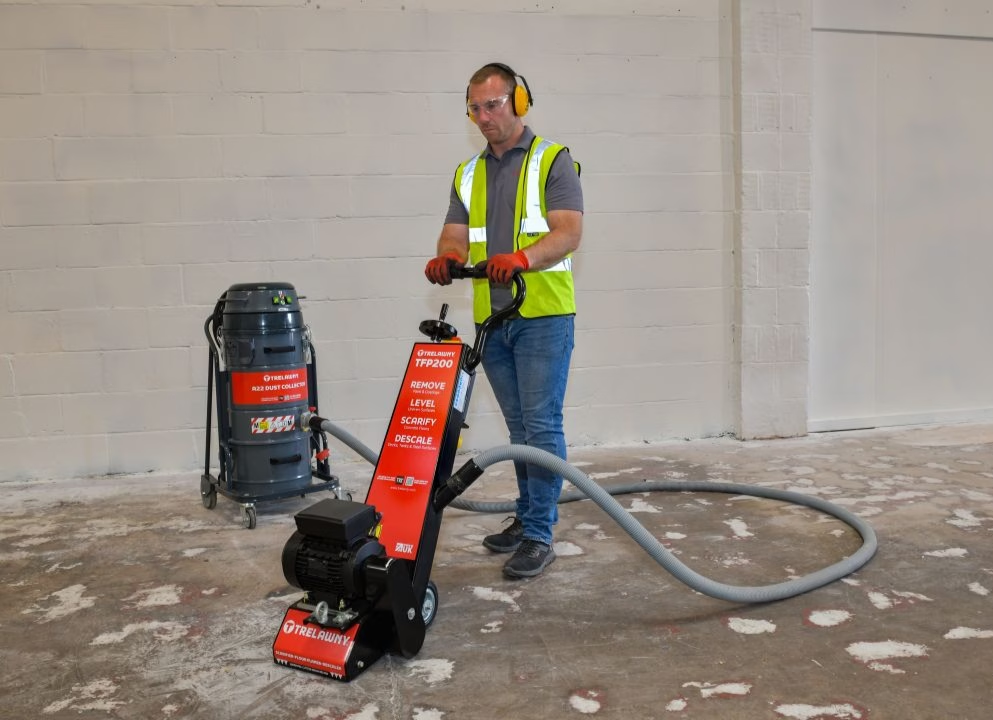
In surface preparation applications, LEV systems often include a combination of industrial vacuums, shrouded tools, hoses, and filtration systems working together to support effective dust control.
Many contractors may not realise that dust extraction equipment used during surface preparation can form part of an LEV system.
Why LEV Testing supports effective dust control
Like any equipment used to support workplace safety, LEV systems must continue to perform effectively throughout their service life.
Blocked filters, damaged hoses, worn components, or reduced airflow can all affect extraction performance over time. Regular inspection and maintenance help ensure systems continue to operate as intended.
In the UK, LEV systems typically require a Thorough Examination and Test (TExT) at least every 14 months to verify their effectiveness and identify any issues that could impact dust control performance.
Dust control responsibilities: What contractors need to know
While manufacturers play an important role in designing and supplying effective dust extraction equipment, responsibility for ensuring LEV systems remain compliant sits with the employer or end user operating the equipment. This includes arranging testing, carrying out maintenance, and ensuring systems continue to perform effectively.
Understanding these responsibilities can help contractors maintain effective dust control measures while supporting their wider health and safety objectives.
The future of dust control in Surface Preparation
As awareness of occupational dust exposure continues to grow, dust control is becoming a key consideration for contractors, site managers, and safety professionals alike.
Understanding how dust extraction systems work, how they should be maintained, and when LEV testing may be required can help organisations create safer working environments while supporting operational efficiency.
At Trelawny, we continue to support customers with practical surface preparation solutions designed to help manage dust effectively and promote safer working conditions across a wide range of applications.
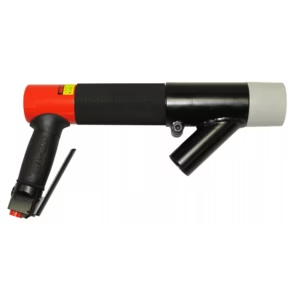
TVS Needle Scalers
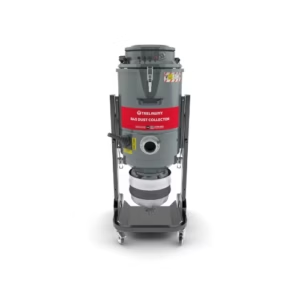
A45 Dust Collector