Power tool surface preparation
Contents:
- Introduction
- Types of surface preparation
- Understanding surface preparation standards
- Where power tool surface preparation delivers the greatest value
- When to use – Needle scalers
- When to use – Vibro-Lo™ technology
- When to use – PPT deck scaler
- When to use – Scaling hammers
- When to use – Deck preparation range
- Site conditions often determine the preparation method
- Matching the method to the job
- The role of power tool surface preparation
Power tool surface preparation: where it fits in the surface preparation process
Surface preparation is one of the most important stages in the performance of any coating system. Before a coating can bond correctly, the surface must be clean, sound and prepared to the required specification.
In marine, oil and gas, infrastructure and industrial maintenance, there is no single preparation method that suits every application. Abrasive blasting, water jetting, chemical methods, hand tools and power tool surface preparation all have an important role to play. The correct choice depends on the coating system, the condition of the substrate, the working environment, access, project scale and the required preparation standard.
Power tool surface preparation comes into its own where an easily deployed, portable and practical solution is needed. It is particularly well suited to localised coating repair, onboard maintenance, restricted access, heavy scale removal, deck preparation, hazardous areas and situations where larger preparation methods are either impractical or not permitted.
Understanding where power tool surface preparation fits within the wider surface preparation process helps contractors, inspectors and maintenance teams choose the right method for every job.
Surface preparation is a toolbox
No single preparation method can solve every maintenance challenge.
Abrasive blasting remains one of the most effective methods for preparing large areas where complete coating removal and a consistent surface profile are required. Water jetting is valuable where soluble salts, corrosion products or contamination need to be removed without abrasive media. Chemical methods also have a place in specific coating removal applications.
Power tool surface preparation fills the gap where work is more localised, access is restricted or site conditions limit the use of larger preparation methods. While individual tools may appear slower than abrasive blasting, their ease of deployment, minimal set-up, reduced clean-up requirements and flexibility often make them the most practical and productive solution.
Typical applications include:
- Localised coating repairs
- Shipboard maintenance
- Pipework and structural steel
- Welds, seams and edges
- Brackets and complex fabrications
- Decks and tank tops
- Heavy corrosion removal
- Difficult access areas
- Hazardous environments
Rather than replacing abrasive blasting, power tool surface preparation complements it, providing maintenance teams with another effective solution within their surface preparation toolkit.
Understanding surface preparation standards
Surface preparation standards provide contractors, inspectors, coating manufacturers and asset owners with a common language for specifying and assessing surface cleanliness.
Internationally, ISO 8501-1 is widely recognised for the visual assessment of steel surface cleanliness before coating. It defines rust grades and preparation grades achieved using methods including abrasive blasting, hand tool cleaning and power tool cleaning. Importantly, the standard recognises that different preparation methods may not produce directly comparable results, making the correct choice of preparation method essential.
In North America and many international coating specifications, standards developed by AMPP (formerly SSPC and NACE) are also widely referenced.
For power tool surface preparation, the most commonly specified standards include:
- SP 3 – Power Tool Cleaning
- SP 11 – Power Tool Cleaning to Bare Metal
- SP 15 – Commercial Grade Power Tool Cleaning
These standards define the required level of cleanliness and, for SP 11 and SP 15, specify the surface profile needed for successful coating performance.
Where power tool surface preparation delivers the greatest value
Power tool surface preparation is particularly valuable where maintenance work must be completed safely, efficiently and with minimal disruption.
This is especially true during onboard maintenance and repair, where crews often work around vessel operations, restricted access, environmental controls and demanding schedules.
Rather than establishing a full blasting operation, operators can prepare localised areas quickly and effectively using portable pneumatic equipment.
Typical examples include:
- Spot repairs
- Welds
- Pipework
- Hatches
- Tank tops
- Structural brackets
- Corroded edges
- Difficult-to-access steelwork
These are precisely the applications where power tool surface preparation provides practical advantages.
Needle scalers: detail work and irregular surfaces
Needle scalers are often the first tools associated with power tool surface preparation because of their versatility.
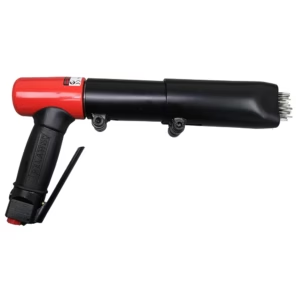
Their reciprocating needles remove rust, coatings and mill scale while following irregular profiles, making them particularly effective on welds, corners, edges, pitted steel and complex fabrications.
Using different needle configurations, including pointed and chisel needles, operators can also create and maintain surface profile where required for coating adhesion.
Trelawny’s B and BPG Series needle and chisel scalers have been developed specifically for these demanding applications. Interchangeable needle and chisel attachments allow a single tool to perform multiple preparation tasks, while long-reach models improve access to difficult areas.
For ship repair, bridge maintenance, industrial painting and oil and gas applications, this versatility makes needle scalers an important part of the power tool surface preparation process.
Vibro-Lo™: reducing vibration while maintaining productivity
Where power tools are used regularly, vibration exposure becomes an important consideration.
Operators may spend long periods preparing steel overhead, in confined spaces or across multiple repair locations. A tool that removes material quickly but causes excessive vibration may ultimately reduce productivity through increased operator fatigue.
Trelawny’s Vibro-Lo™ technology was developed to reduce vibration levels by up to seven times while maintaining the performance expected from a professional pneumatic scaler.
The benefits extend beyond operator comfort. Lower vibration can help reduce fatigue, support longer safe working periods and improve control during repetitive surface preparation tasks.
The Vibro-Lo™ range also offers options including dust control, drop protection and ATEX-certified models to meet the requirements of challenging industrial environments.
PPT: creating surface profile without abrasive blasting
Surface profile plays a critical role in coating performance.
Although abrasive blasting remains the preferred method for producing anchor profile, site restrictions sometimes require an alternative approach.
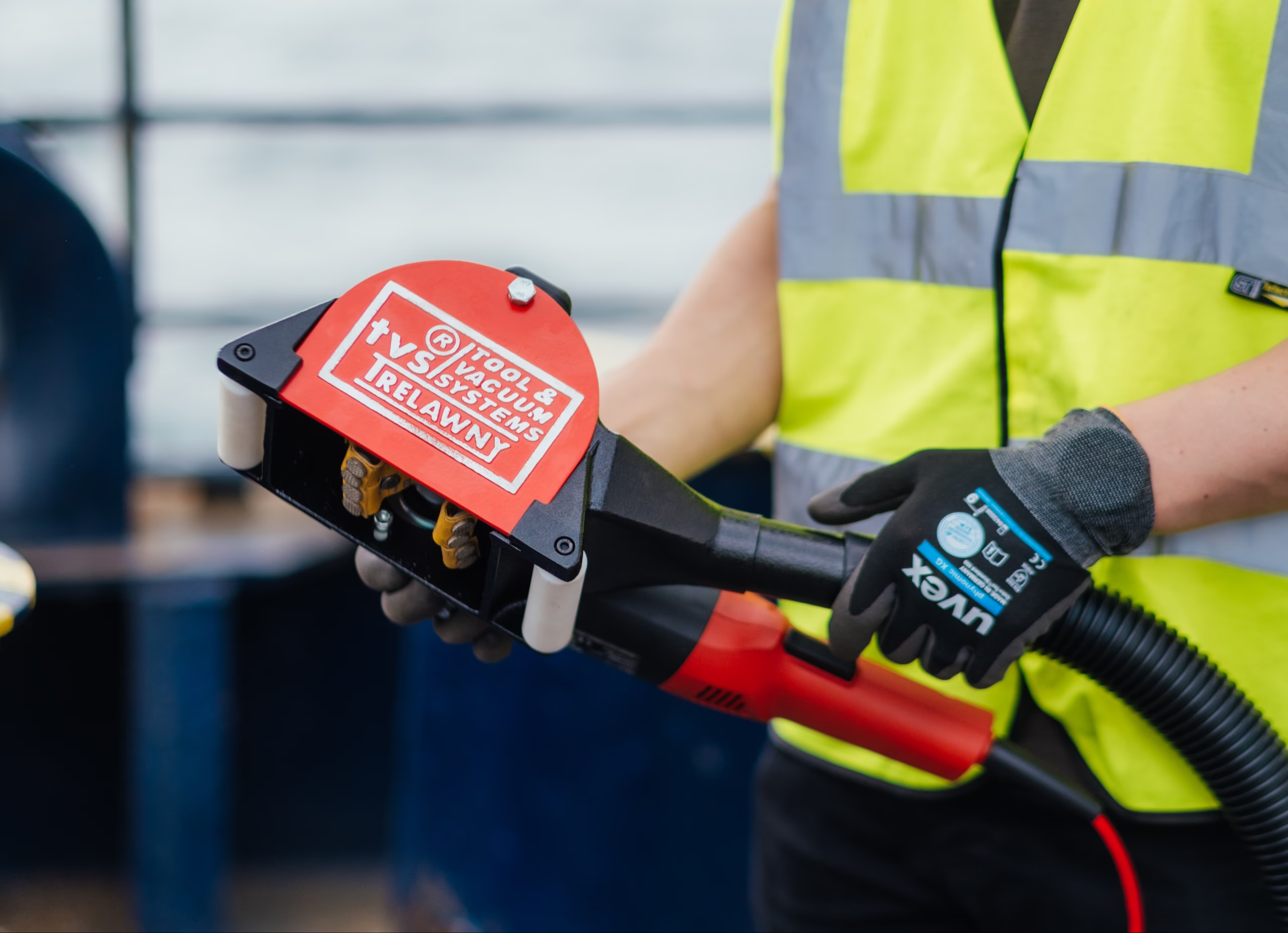
The Trelawny PPT (Peening Preparation Tool) uses 3M Rotopeen flaps with captive shot technology to create surface profiles exceeding the 25-micron requirement specified by SP 11, often achieving profiles of up to 75 microns while maintaining productivity of up to four square metres per hour.
For removing thick epoxy coatings, the interchangeable star cutter hub provides an effective mechanical preparation solution before final surface preparation.
Scaling hammers for heavy corrosion
Some maintenance applications require greater impact than a needle scaler can provide.
Heavy pack rust, thick corrosion, anti-slip coatings and hard coating build-up often need to be fractured before they can be removed efficiently.
Trelawny’s ScaleForce handheld scaling hammers deliver the impact energy needed for aggressive mechanical removal from steelwork, pipework, decks, bulkheads and confined areas.
Deck preparation for larger steel surfaces
When preparing larger areas such as ship decks, tank tops and walkways, handheld tools may not always provide the most productive solution.
Trelawny’s deck preparation range, including the TFP deck scalers and ScaleForce deck hammers, offers an efficient method for removing corrosion, coatings and scale across larger steel surfaces while maintaining the portability required for onboard maintenance.
Available in electric, pneumatic, petrol and battery-powered versions, the range provides flexibility across a wide variety of working environments.
Site conditions often determine the preparation method
Surface preparation is influenced by far more than the required cleanliness standard.
Marine, offshore, petrochemical and industrial sites frequently present practical challenges including restricted access, working at height, hazardous atmospheres, environmental controls and multiple trades operating simultaneously.
These conditions often determine which preparation method is both practical and safe.
This is why Trelawny offers low-vibration tools, dust shrouds, non-sparking consumables, drop protection and ATEX-certified equipment across relevant parts of its range.
Ultimately, the coating specification, substrate condition, site environment and risk assessment should all contribute to selecting the most appropriate preparation method.
Matching the method to the job
Successful coating performance begins with understanding both the required preparation standard and the practical realities of the maintenance task.
Power tool surface preparation is particularly effective where:
- Repairs are localised
- Access is restricted
- Larger preparation methods are impractical
- Maintenance must be completed with minimal disruption
- Portability is essential
Different tools fulfil different roles. Needle scalers are ideal for detailed preparation and irregular surfaces. Vibro-Lo™ models help reduce vibration during prolonged use. Scaling hammers provide greater impact for heavy corrosion, while deck preparation equipment improves productivity across larger steel areas.
Used together, these tools provide contractors and maintenance teams with a practical, efficient and flexible approach to surface preparation.
The role of power tool surface preparation
Surface preparation is a broad discipline, and no single method is suitable for every application. Abrasive blasting, water jetting, chemical methods, hand tools and power tools all have clearly defined roles within the maintenance process.
Power tool surface preparation continues to be an essential solution because it addresses many of the practical challenges encountered in real-world maintenance, including restricted access, localised repairs, onboard work, heavy corrosion and hazardous environments.
At Trelawny, we have spent decades developing professional surface preparation equipment for these demanding applications. From needle scalers and Vibro-Lo™ low-vibration technology to ScaleForce scaling hammers, the PPT Peening Preparation Tool and deck preparation equipment, our range is designed to help contractors, ship owners and industrial maintenance teams prepare surfaces safely, efficiently and to recognised industry standards.
Effective repairs always begin with effective preparation. In many maintenance applications, that preparation starts with the right power tool.
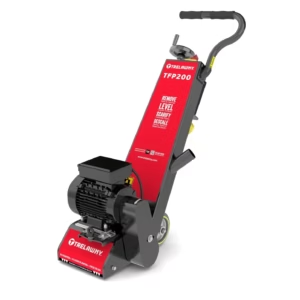
TFP200 Deck Scaler
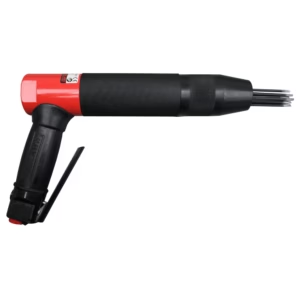
Low Vibration & ATEX Needle & Chisel Scalers
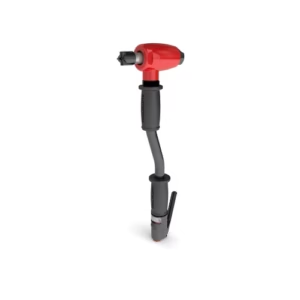
SF1 and SF3 Scaling Hammers