Concrete surface preparation: Scabbling and Scarifying – What are the differences?
Scabbling and scarifying are both methods of concrete surface preparation that involve removing the top layer of concrete to create a rough surface for bonding new concrete or other materials. While the two methods are similar in concept, there are some key differences in terms of effectiveness, cost and application.
Concrete surface preparation with Scabblers
Scabblers are pneumatic tools fitted with tungsten carbide-tipped pistons that rapidly impact the surface.
Trelawny manufactures handheld models with single- or three-piston heads for small horizontal or vertical areas. These are particularly well suited to preparing joints and other detailed areas where larger equipment cannot access.
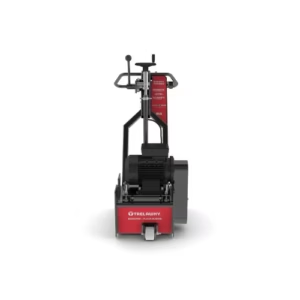
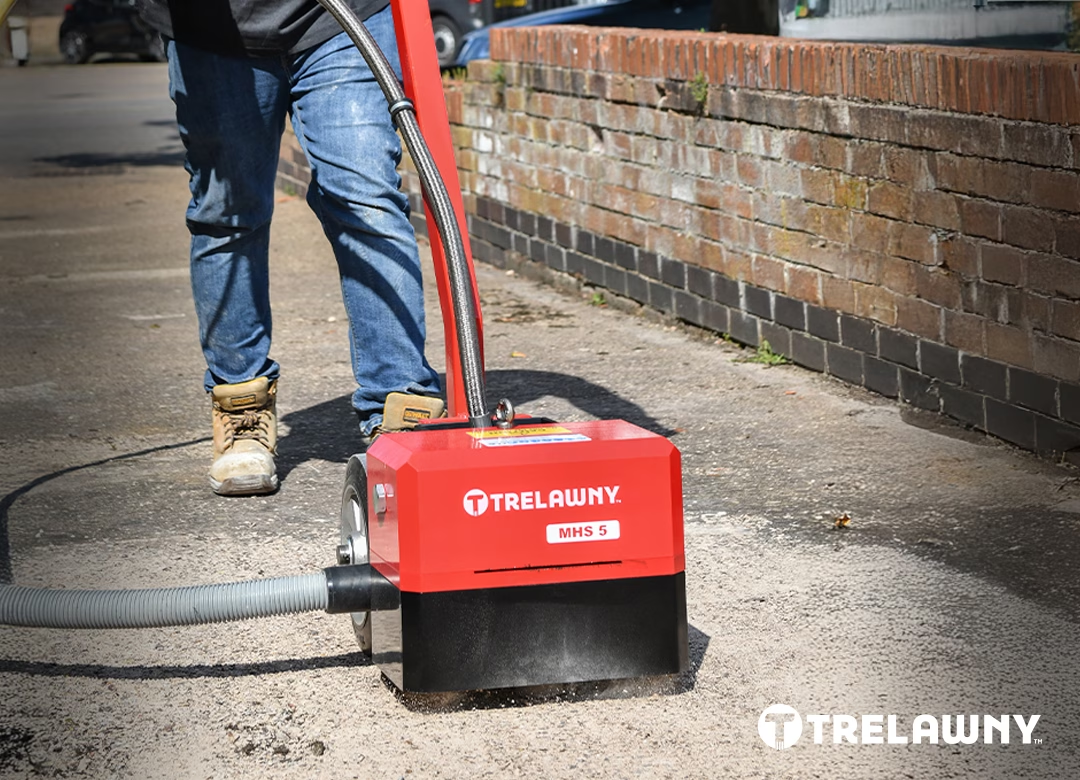
Trelawny MHS walk-behind scabblers can remove thick layers of material from large areas such as bridge decks. They are especially suited to removal and reduction applications where a very high surface profile is required.
Key features:
- Available in handheld or walk-behind models
- Tungsten carbide-tipped pistons impact the surface, chipping and removing concrete
- Walk-behind machines are capable of removing up to 6 mm per pass
- Produce a heavy Concrete Surface Profile (CSP) rating of 7–10
- Pneumatically driven
Concrete surface preparation with Scarifiers
Scarifiers, sometimes referred to as concrete planers, utilise a rotating cutter head that “planes” away the surface of the concrete, creating a rough textured finish. They can be powered by a range of power sources and are available in a number of sizes.
They are best suited for removal applications such as reducing concrete levels and removing coatings and adhesives.
Key features:
- Available in handheld and walk-behind models in various sizes
- Cutters assembled on a rotating drum impact the surface at high velocity, fracturing and removing material
- Small machines remove 2–3 mm per pass; larger models can remove up to 6 mm per pass
- A range of cutters are available for light to heavy removal applications
- A wide range of CSP profiles (4–10) can be achieved using different cutters and drum configurations
- Available with multiple power sources including electric, battery, petrol and pneumatic motors
Concrete surface preparation comparison overview
Power Source Availability
| POWER SOURCE | SCABBLER | SCARIFIER |
| Electric | ✗ | ✓ |
| Petrol | ✗ | ✓ |
| Pneumatic | ✓ | ✓ |
| Battery | ✗ | ✓ |
CSP Range
- Scabblers: 7–10
- Scarifiers: 4–8
Adjustable Removal Rate
- Scabblers: ✗
- Scarifiers: ✓
Dust Control
- Scabblers: ✓
- Scarifiers: ✓
Summary: Choosing the Right Method for Concrete Surface Preparation
Scabblers are a productive option when high removal rates and surface profiles at the upper end of the CSP scale are required.
Being pneumatically driven, they are simple, reliable, easy to maintain and able to withstand heavy use. Initial costs are similar to those of a scarifier if a compressor is already available. Ongoing consumable and maintenance costs are generally lower.
Alternatively, scarifiers provide a versatile solution with a range of power options, sizes and cutter types. Their ease of deployment on site and ability to tackle a wide range of applications makes them an invaluable addition to a contractor’s surface preparation fleet.
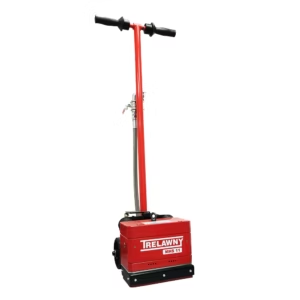
MHS11 Floor Scabbler
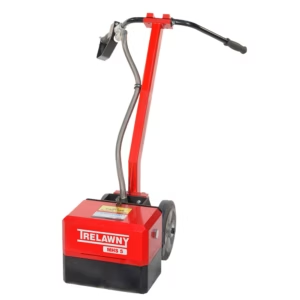
MHS5 Floor Scabbler
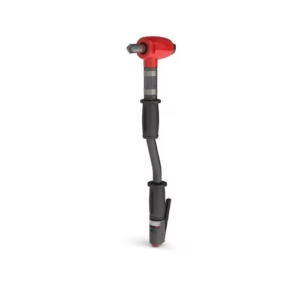
SH1 & SH3 Handheld Scabblers
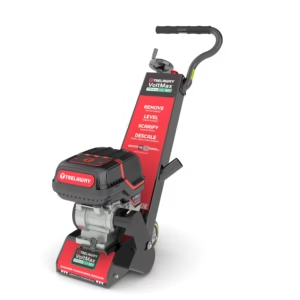
TFP200 Floor Scarifier