Concrete Surface Profiles Explained: How to Choose the Right Trelawny Equipment
In concrete surface preparation, the finish you leave behind is just as important as the material you remove. Before coatings, overlays, repair mortars or fresh concrete can be applied successfully, the substrate needs to have the right concrete surface profile (CSP).
CSP describes the peaks and troughs in the concrete surface. Measured in microns or mils, it determines how smooth or rough the substrate is — and how well the next layer will bond to it. In simple terms, smoother finishes require a lower CSP, while heavier coatings and repair systems need a more aggressive profile to create a strong mechanical key.
The CSP scale is usually referenced using ICRI profile chips, which provide a practical visual scale ranging from light to heavy surface profiles. However, understanding the CSP number is only part of the process.
To achieve the correct result, that requirement must be translated into the right preparation method. Grinding, scarifying and scabbling each produce very different finishes, and selecting the wrong one can lead to poor adhesion, rework and reduced performance.
The key is to work backwards from the specification — identify the required CSP, then choose the equipment that will achieve it.
Why CSP matters
Knowing the correct CSP is important because the surface profile directly affects how the next layer performs.
Selecting the correct CSP helps ensure coatings, overlays and repair systems bond as intended. If the profile is too smooth, adhesion may be compromised. If it’s too aggressive, additional preparation or finishing work may be required.
Different materials demand different surface profiles. Thin coatings and sealers typically require a lighter, more even finish, while thicker self-levellers, polymer overlays and concrete repairs need progressively more texture to create a strong mechanical key.
This is where a structured approach becomes essential. By starting with the specification, identifying the required CSP, and then selecting the method that will achieve it, contractors can prepare surfaces with confidence. Each type of equipment delivers a distinct surface profile, and choosing the wrong one can lead to inconsistent results and unnecessary rework.
Trelawny’s Machine CSP chart supports this process by aligning material requirements directly with the equipment needed to achieve them.
Once the required CSP has been identified, selecting the right method becomes critical. Concrete surface preparation is never a one-machine solution. Grinding, scarifying and scabbling each produce very different finishes and are suited to different CSP ranges.
Grinders: lighter profile, smoother finish
Floor grinders use a horizontal rotating disc fitted with diamonds or other abrasives to level, smooth and clean the surface. They’re particularly useful where a flatter, more consistent finish is required, and they’re well suited to profiling floors before the application of thin coatings or paints because they don’t leave ridges in the surface in the way a scarifier can.
Grinders are used where a lower CSP and a smooth, consistent finish are required. Using a horizontal rotating disc fitted with diamonds or abrasives, they level, clean and refine the surface without leaving ridges.
Typical grinding applications include removing thin coatings, adhesives and cement screeds, levelling rough or uneven concrete, and creating the correct profile for thin coatings and sealers. They’re also often used to create a finished or decorative surface.
Scarifiers: removal, reduction and versatile profiling
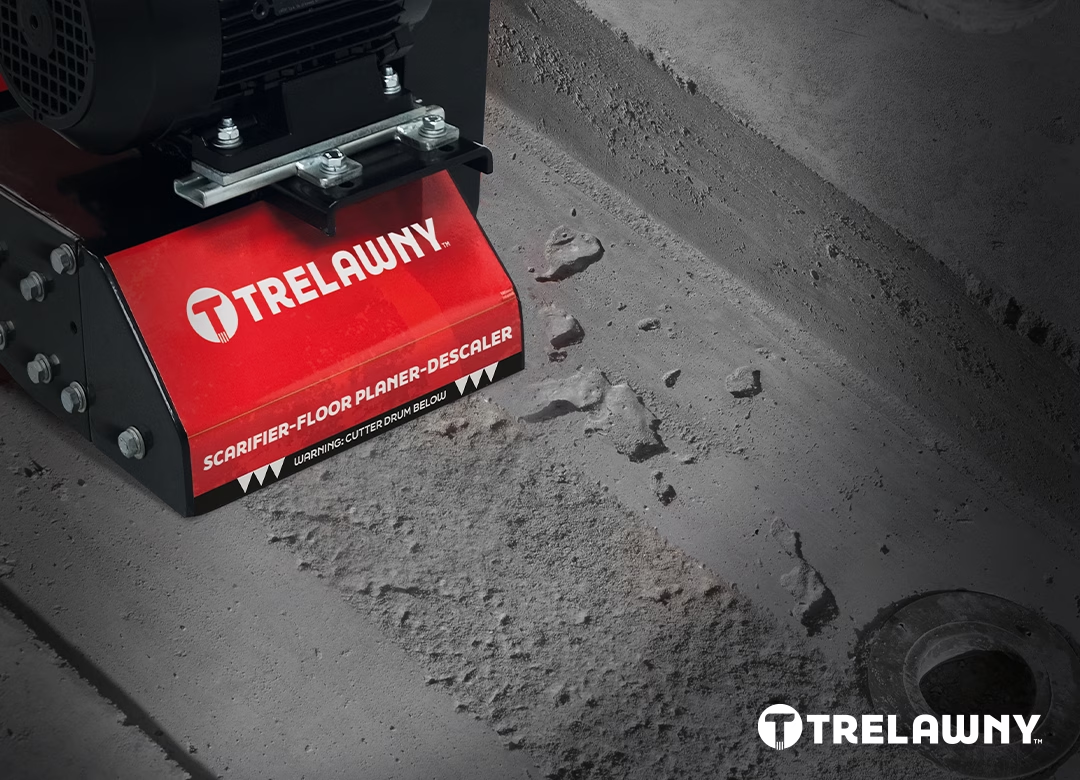
Scarifiers, sometimes referred to as surface planers or milling machines, use a rotating drum of multi-tipped cutters to impact and remove the surface. They’re more aggressive than grinders and are designed for jobs that involve both removal and profiling. Typically, they are best suited to removing coatings over 1mm thick, reducing and levelling concrete, grooving for non-slip applications, creating a textured finish, removing line markings and eliminating trip hazards.
A key advantage of the Trelawny TFP scarifier range is its versatility. Integrated height adjustment allows varying depths of cut, while quick-change drum designs make it easy to switch cutters to suit the task. Different cutter assemblies can produce different finishes, which is where scarifiers become especially useful when working to meet a CSP requirement.
Trelawny cutter options enable a wide range of CSP outcomes:
- Wire brush: CSP 1
- Beam: CSP 4
- Star: CSP 4-5
- Milling: CSP 4-6
- TCT: CSP 6-8
- TCT grooving setup: CSP 6-8
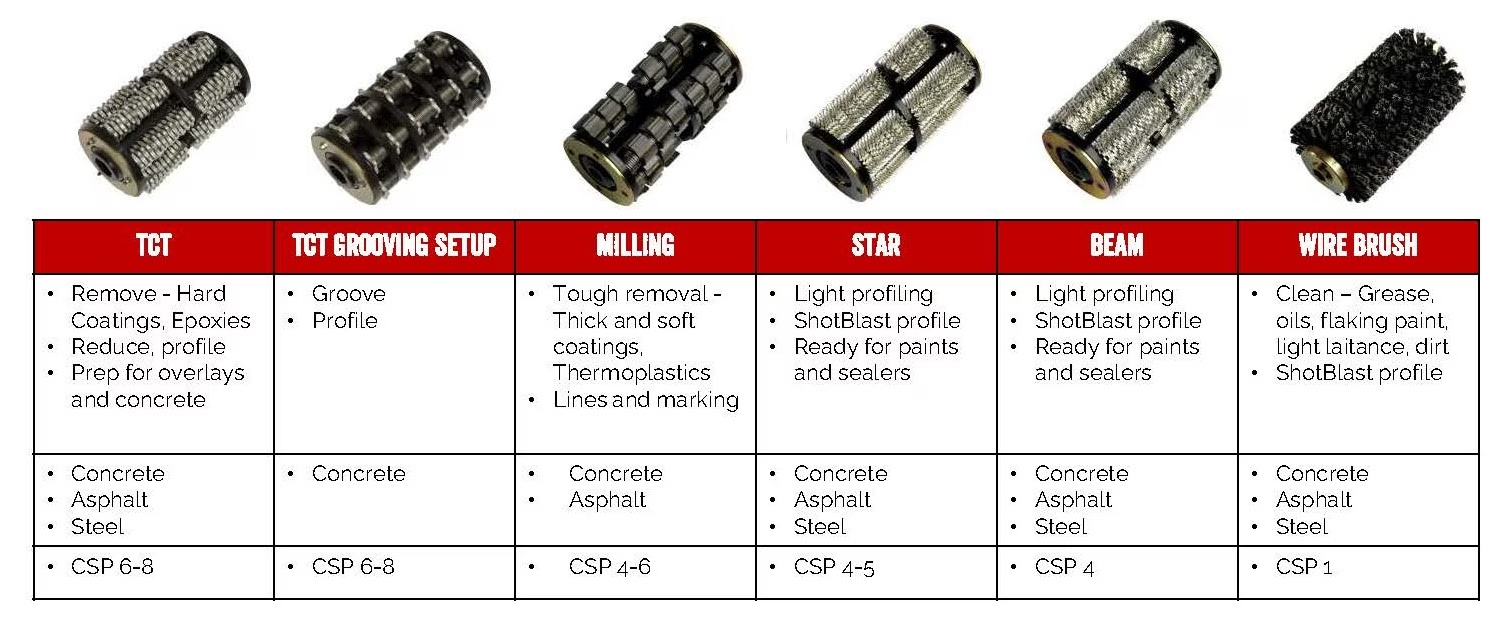
This makes scarifiers one of the most adaptable machines in the range. They can remove hard coatings and epoxies, profile for overlays, cut grooves, remove thermoplastics and line markings, and bridge the gap between light surface preparation and heavy-duty reduction.
Scabblers: heavy profile and strong mechanical key
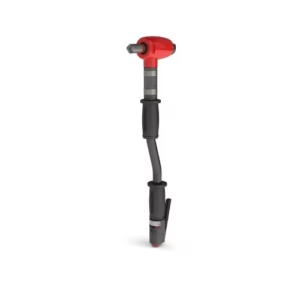
For heavy-duty concrete surface preparation, scabblers come into their own when a deeper, more aggressive profile is required. These percussive pneumatic tools use carbide-tipped cutting heads to strike the concrete in rapid succession, leaving a rough, heavily textured finish. They’re particularly effective where significant material removal or a strong mechanical key is essential.
Trelawny scabblers are suited to preparing surfaces for fresh concrete, grout, mortars and renders, reducing concrete levels over 6mm, removing very thick coatings, removing laitance, exposing aggregate and rectifying overpoured slabs.
Operating at the upper end of the CSP scale, Trelawny scabblers produce a CSP range of 7-10. Handheld models are ideal for joints, edges and detailed areas, while MHS walk-behind scabblers are designed for larger floor areas and heavier reduction work where a very high surface profile is needed.
Trelawny’s Machine CSP Chart
The right approach to concrete surface preparation is to start with the end requirement. Identify the coating, overlay or repair system being applied, understand the surface profile it needs, and then select the Trelawny machine that will achieve it efficiently and consistently.
- TCG Grinders – for lighter profiling, smoothing and finishing.
- TFP Scarifiers – for removal, reduction and medium to heavy texturing.
- Trelawny Scabblers and MHS Floor Scabblers – for the heaviest preparation and the strongest mechanical key.
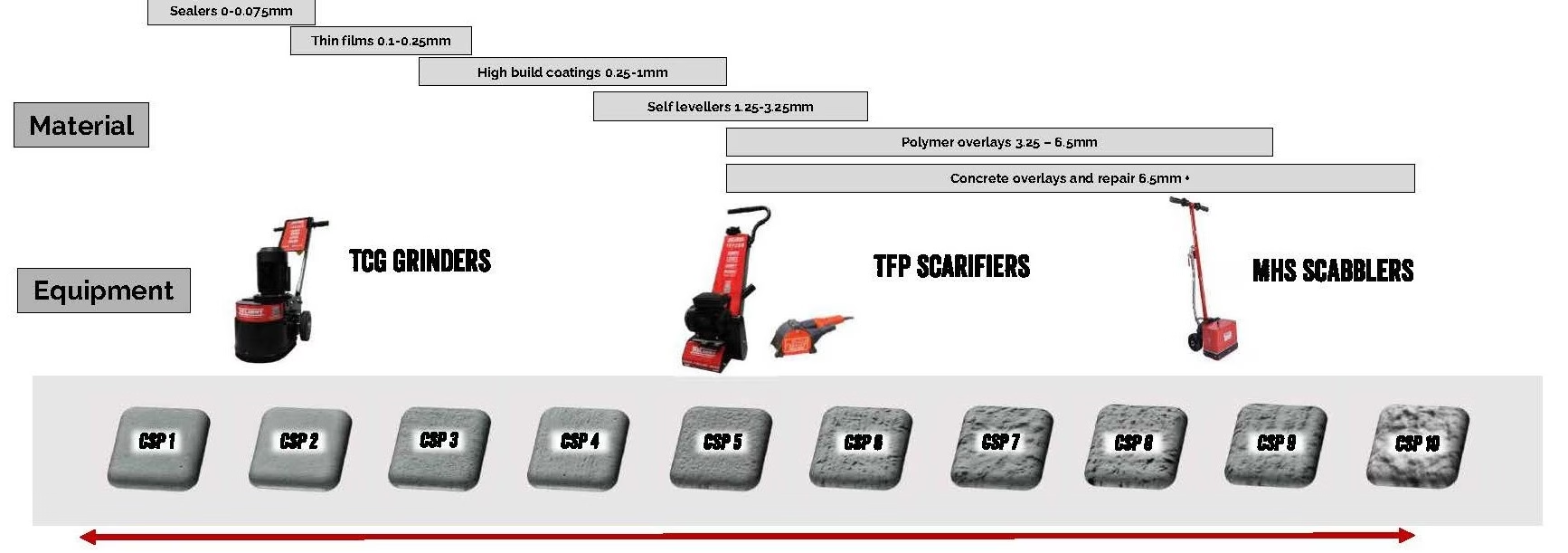
Concrete surface profile is critical to the long-term performance of the system being applied. If the profile is too light, the adhesion may be compromised; too aggressive, and additional finishing work may be needed. In some cases, achieving the desired profile requires a combination of methods.
More about Trelawny
By understanding CSP and matching it to the correct equipment, contractors can prepare surfaces for optimal results. From fine grinding through to aggressive scarifying and heavy-duty scabbling, the Trelawny range provides a practical solution for every stage of concrete surface preparation.
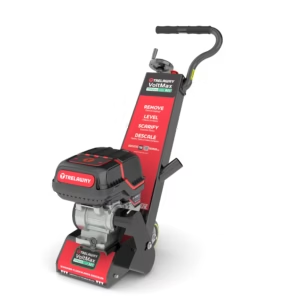
TFP200 Floor Scarifier
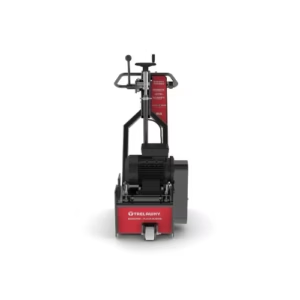
TFP260 Floor Scarifier
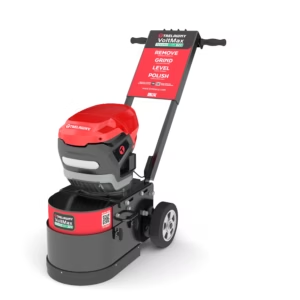
TCG250 Floor Grinder
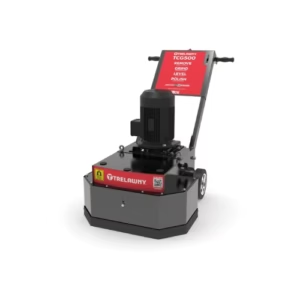
TCG500 Floor Grinder
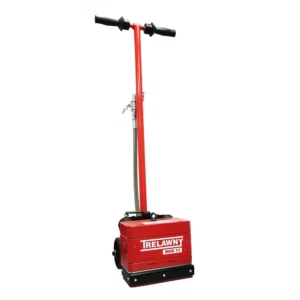
MHS11 Floor Scabbler
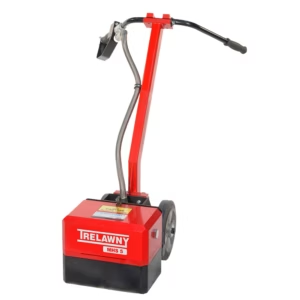
MHS5 Floor Scabbler