The complete guide to concrete surface preparation
Concrete surface preparation is a job that’s easy to underestimate and expensive to get wrong. The difficulty with the term concrete surface preparation is that it sums up a host of methods, equipment and finishes.
This guide will explain what concrete surface preparation is, why it matters, the equipment involved and how to find the right approach for a specific job.
What is concrete surface preparation?
Concrete surface preparation refers to repairing, stripping, profiling, levelling or priming a subfloor to prepare it for a new flooring installation.
The purpose of concrete surface preparation is to get the subfloor into the optimal condition for what you plan to do next. It might be that you’re applying an epoxy coating, a resin flooring or a fresh layer of concrete. Whatever the job, the performance of the new material depends on the quality of the subfloor it’s being applied to.
Concrete surface preparation can look like:
- removing existing coatings, paint, line markings, adhesives or floor coverings
- removing laitance and other weak or contaminated materials
- reducing or levelling concrete, such as high spots and over-poured slabs
- creating a defined surface texture or profile, so the next application has something to bond to
- preparing edges and detail areas
A term that’s worth knowing early on is laitance – a chalky layer of fine cement particles that rise to the surface of concrete as it cures. While it looks like part of the floor, it’s not structurally sound and it affects how a new layer bonds. Remove it to ensure a long-lasting finish.
Why is concrete surface preparation important?
A new flooring system placed over the top of a subfloor requires a strong bond. No matter how premium a coating is, if you skip surface preparation and cut corners or use the wrong method, it can show wear long before it should.
Proper concrete surface preparation aims to:
- Remove weak, contaminated or unwanted materials
Laitance, curing compounds, degraded coatings – whatever the subfloor has on it, it needs to be removed so the new system attaches wholly to the clean substrate beneath. - Create the optimal floor surface profile for the new system to bond to
You want your new surface to key properly, so the roughness of the prepared surface needs to match – if it’s too smooth, or too coarse, the coating won’t bond properly. - Extend the lifespan of the finished floor
With optimal concrete surface preparation, you can expect the floor to perform up to its designed lifespan. Without, it will degrade much quicker under heavy traffic, impact or thermal movement. - Reduce the risk of failure and rework
Delamination, peeling, dusting at the edge or blistering are all signs that something isn’t quite right beneath the surface. The right preparation prevents costly repairs and rework.
Understanding the Concrete Surface Profile (CSP)
The CSP refers to the texture of a prepared concrete surface. It’s a way to define how smooth or rough the substrate needs to be before applying another system.
CSP typically uses an ICRI profile scale which goes from CSP 1 – CSP 10. The lower the CSP, for example, CSP 1, the smoother the surface is. As the CSP number increases, the surface is more textured.
The required profile depends on what’s being applied. Thin coatings and sealers often require a lighter profile and thicker overlays require more aggressive profiles to ensure a strong mechanical key (a strong bond).
In concrete surface preparation, you need to work backwards from your specification by first establishing the CSP required by the coating or repair system and then choose a preparation method that will best produce the optimal profile.
| CSP range | Surface feel | Typical use case |
| CSP 1-3 | Smooth to lightly textured | Sealers and thin-film coatings |
| CSP 4-6 | Medium texture | High-build coatings, self-levelling systems and some overlays |
| CSP 7-10 | Heavily textured to expose aggregate | Thick overlays, toppings and repair mortars |
These ranges are a general guide only. Always use the manufacturer’s specification to confirm the correct CSP for the coating, overlay or repair system you are laying.
Read our previous blog on the CSP scale and the profiles different Trelawny machines and cutters produce.
WHat equipment is used in concrete surface preparation?
Concrete surface preparation covers a range of jobs including stripping out old vinyl and reducing concrete by several millimetres – no single machine handles them all – which is why it’s important to know what each one does best.
Floor scarifiers
These machines use a rotating drum fitted with cutters that impact and remove material from the floor. They’re generally used for more aggressive material removal, taking off coatings and line markings, reducing high spots and creating a textured or profiled surface.
The scarifier is versatile thanks to the drum, as it accepts a wide range of interchangeable cutters and each cutter produces a different finish – so the same machine can be set up for a light clean with a wire brush and can also be used to remove heavy coatings with carbide-tipped cutters.
Trelawny scarifier range:
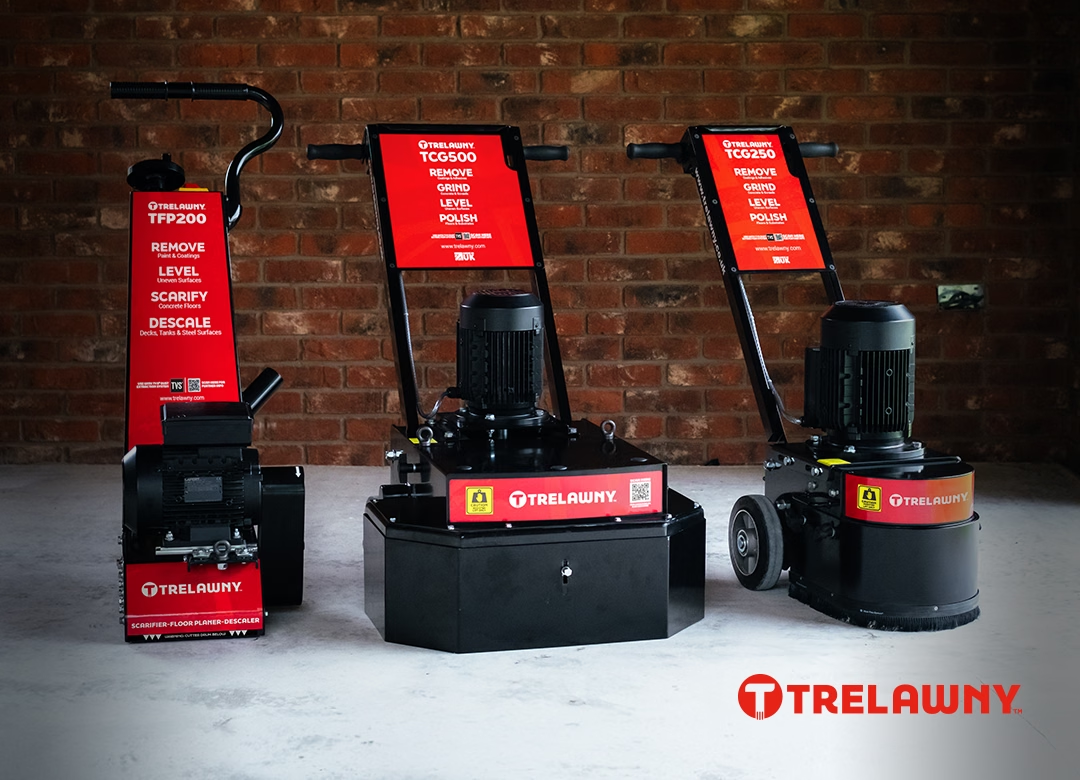
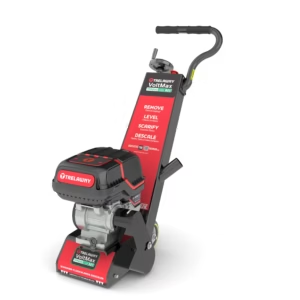
- TFP200 Floor Scarifier provides controlled surface preparation for concrete and steel. It removes coatings, levels and textures. Its rigid steel chassis makes it a strong and stable machine for accurate surface work and it has a range of attachments so it can adapt to different jobs.
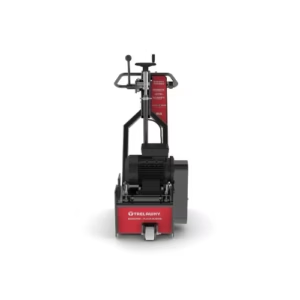
- TFP260 Floor Scarifier is a heavy-duty machine for your medium to large jobs. It has an increased weight and power for exceptional performance. Its robust chassis and double-web cutter drum handles the toughest surface preparation tasks and the quick-lift drum mechanism improves operator control and safety.
Floor scabblers
These machines use carbide-tipped heads to repeatedly impact the concrete. They’re generally used for heavier concrete preparation, laitance removal, concrete reduction and creating a rough surface.
Trelawny scabbler range:
- MHS5 Floor Scabbler is the go-to machine for rapid level reduction. Five 50mm carbide-tipped heads deliver 1,300 powerful blows, each creating a heavy key for fresh concrete and overlay applications. It’s suited to removing thick coatings, reducing uneven surfaces, surface demolition and removing laitance.
- MHS11 Floor Scabbler uses smaller heads combined with a 70% increase in blows per minute and a 30% reduction in air consumption to maximise productivity, efficiency, value and ergonomics without compromise. Production rates more than 30m² per hour make it the machine for fast removal of laitance, level reduction and profiling for new concrete, thick screeds and sealants.
Floor grinders
These machines use rotating abrasive or diamond tooling that work their way across the floor. They leave a smoother finish than scarifying or scabbling and are the choice when the new flooring is a thin coating, sealer or decorative finish.
Trelawny grinder range:
- TCG250 Floor Grinder is a robust single-head grinder for small to medium areas. Its heavy-duty construction and range of tooling options make it a flexible choice for lots of surface preparation tasks.
- TCG500 Floor Grinder is a dual-head grinder for bigger areas – medium and large. Its grinding heads provide balance and the flexible disc coupling ensures optimal contact with the surface, maximising diamond usage even on rough terrain.
Floor strippers
These machines operate differently, rather than working the concrete itself, a blade gets underneath a bonded material and lifts it. On most jobs, stripping is the first stage of concrete surface preparation – once the covering is lifted, the exposed substrate usually still needs grinding or scabbling to prepare it.
Typical stripper applications include the removal of lino, carpet tiles, vinyl and other floor coverings and the removal of backing adhesives and residues.
Trelawny stripper range:
- TFS230 Floor Stripper has a compact, robust and durable chassis designed for easy transportation. It’s ideal for lifting vinyl flooring and carpet tiles on small to medium-sized indoor renovation projects.
Handheld tools
These tools deal with everything that the walk-behind machines can’t – almost every job needs both. Handheld tools are great for reaching edges, corners, stairs, confined spaces like the strip of floor that runs against a wall.
Trelawny handheld range:
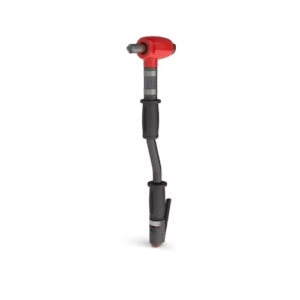
- SH1 and SH3 Handheld Scabblers are single or triple-head scabbling hammers that feature Trelawny’s lowest vibration technology, perfect for roughing and preparing concrete in small areas. They’re efficient to use and minimise vibration to ensure comfort when used.
What are the main concrete surface preparation methods?
There are many methods that can be used to prepare a floor surface but the right one depends on the condition of the existing floor, the material that needs to be removed and the finish or profile that’s being applied next.
The table below compares the main concrete surface preparation methods, how they work, where they are best suited and the type of result you will achieve.
| Method | How it works | Best suited to | Typical result |
| Grinding | Uses rotating abrasive or diamond tooling to work the surface | Smoothing concrete, removing light coatings or residues, general surface preparation | Smoother, even surface |
| Scarifying/planning | Uses a rotating drum fitted with cutters to impact and remove material | Removing coatings, reducing high spots, texturing and profiling concrete | More aggressively textured or profiled surface |
| Scabbling | Uses multiple impact heads to repeatedly strike the concrete | Laitance removal, concrete reduction, heavy-duty preparation and roughening | Rough, heavily textured surface |
| Stripping/scraping | Uses a blade or scraper to get underneath and lift material from the floor | Removing adhesives, floor coverings, membranes and some coatings | Existing material removed with minimal impact on the substrate |
| Handheld mechanical preparation | Uses smaller impact, scraping or scaling tools | Edges, corners, stairs, confined spaces and localised preparation | Depends on the tool and application |
How to choose the right concrete surface preparation equipment
The best way to decide on what floor preparation equipment you need is to begin with the result you need to achieve. Consider what needs to be removed, the finish or profile that’s being applied afterwards and the size of the project.
Step 1: What needs removing?
Firstly, what needs to come off the old surface? This will help you find the most suitable concrete surface preparation machine.
- Adhesive/floor covering – stripping tools are the most suitable option.
- Laitance/heavier concrete preparation – scabbling equipment can provide the most aggressive action required.
- High spots/more aggressive removal – scarifying tools are often best suited here.
- Smoothing/lighter preparation – grinding equipment is often the preferred choice.
Step 2: What surface profile does the new system need?
If another coating, screed or flooring is being applied, check the surface profile required by its manufacturer.
- Smoother profile – grinding machines
- Medium profile – scarifying machines
- Heavy profile – scabbling machines
Step 3: How big is the job?
The size and layout of your project will determine what you need to complete it.
- Large, open areas – use walk-behind machines like the TFP260 and TCG500, for example.
- Smaller, restricted areas – use a compact walk-behind machines like the TFP200 and TCG250.
- Hard-to-reach detail – use handheld tools like the SH1 and SH3.
Step 4: What else matters?
The machine is just part of the decision, you also should be considering:
- dust extraction
- available power/compressed air
- noise and vibration
- operator comfort and ease of handling
- access and working space
- the correct blades, cutters, discs or other tooling for the task
More about Trelawny
If you have questions about our products or want to discuss how we can support your requirements, contact us.
You can also follow us on LinkedIn for our latest updates, promotions and news.
TFP200 Floor Scarifier
TFP260 Floor Scarifier
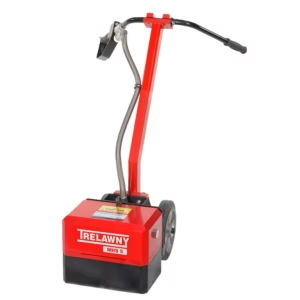
MHS5 Floor Scabbler
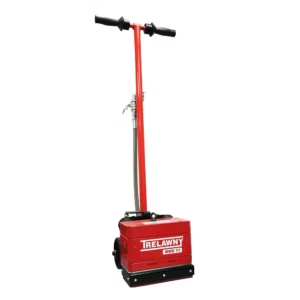
MHS11 Floor Scabbler
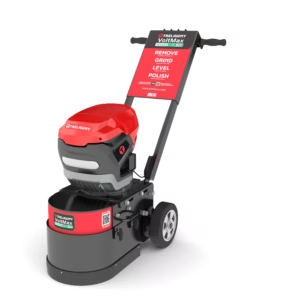
TCG250 Floor Grinder
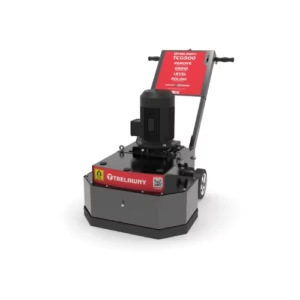
TCG500 Floor Grinder

TFS230 Floor Stripper